- Tel :+86 15159593537
- Email :runhang@tjdiaper.com.cn
Every parent wants the absolute best for their baby, especially when it comes to everyday essentials like baby diapers. A high-quality diaper does more than just keep a baby dry—it protects their delicate skin, ensures restful sleep, and supports their active development.
For parents, choosing the right diaper and learning correct diapering techniques can eliminate daily stresses like leaks and diaper rashes. For B2B buyers, retailers, and private label brands, understanding these product dynamics is the key to capturing market share in the highly competitive hygiene industry.
This ultimate guide covers everything you need to know about baby diapers, from core materials and diaper types to step-by-step usage instructions and pro diapering tips.
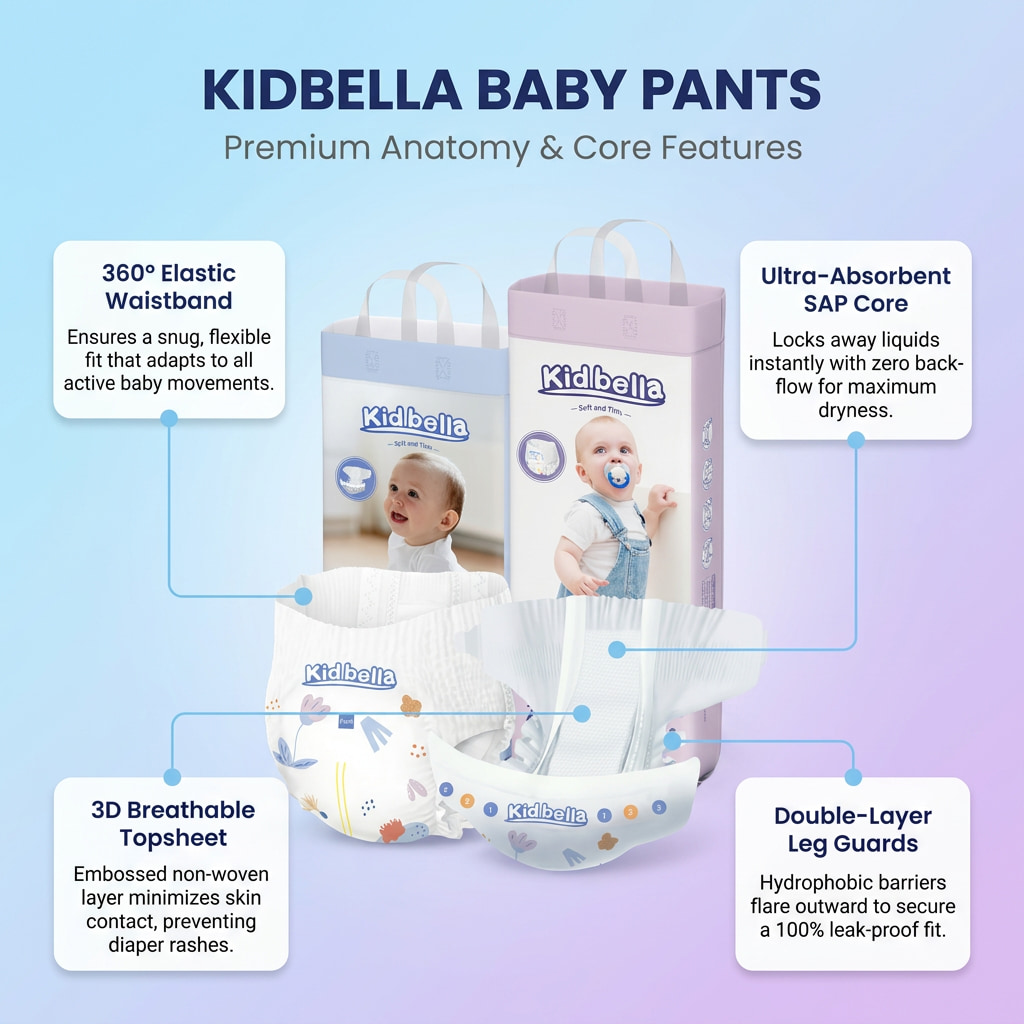
To understand what makes a baby diaper high-performing, we must look at its anatomy. Modern disposable baby diapers are masterpieces of engineering, designed to keep moisture away from the baby's skin while maintaining maximum breathability.
The heart of any diaper is its core, which is responsible for absorbing and locking away liquids. It typically consists of:
Understanding the different categories of baby diapers is essential for choosing the right product for a baby's specific developmental stage.
| Diaper Type | Main Characteristics | Best Suited For | Key Advantages |
|---|---|---|---|
| Tape Diapers (Open Type) | Traditional diapers with adjustable resealable adhesive or magic tabs on both sides. | Newborns to crawling infants (0–9 months). | Easy to put on and adjust when the baby is lying flat; gentle on healing umbilical cords. |
| Baby Pants (Pull-Ups) | Underwear-like diapers with a 360-degree elastic waistband that slip easily onto the baby. | Active crawling, standing, and walking babies (6 months+). | Extremely easy to change on squirming or standing toddlers; promotes potty training independence. |
Proper application is just as important as choosing a premium diaper. Even the best diaper will leak if put on incorrectly. Follow these step-by-step instructions for a perfect, leak-proof diaper change.
Wash your hands thoroughly and gather your diapering supplies: a clean diaper, baby wipes (alcohol-free and unscented), diaper rash cream, and a change of clothes if necessary. Place your baby on a flat, secure diapering pad.
Open the dirty diaper. Gently lift the baby's legs by the ankles and fold the dirty diaper underneath them (using the clean outer shell to wipe down any major mess). Use gentle baby wipes to clean the diaper area from front to back (especially crucial for baby girls to prevent UTIs). Allow the skin to air-dry completely. Applying a diaper on wet skin is a primary cause of diaper rash.
Slide a fresh, open diaper under your baby. The back half with the fastening tabs should be placed under their bottom (aligned with their waist), while the front half folds up over their tummy. If your baby is a newborn, ensure the front of the diaper is folded down to keep the umbilical cord stump dry and exposed to air.
Symmetrically pull the fastening tabs from the back and secure them onto the front landing zone. The fit should be snug but comfortable.
Run your finger around the elastic leg cuffs (ruffles) to ensure they are flared outward and not tucked inside the diaper. Tucked-in ruffles are the #1 cause of leg leakages.
Here are professional tips from pediatric and manufacturing experts to ensure diapering success:
For global distributors, brand owners, and importers, sourcing consistent, medical-grade hygiene products is vital for business success.
Quanzhou Tianjiao Lady & Baby's Hygiene Supply Co., Ltd. is a world-class OEM/ODM manufacturer specializing in high-performance baby diapers, training pants, adult diapers, and sanitary napkins.
Contact our business development team today to request free product samples, factory video tours, or customized quotes.
A: You should change your baby’s diaper every 2 to 3 hours, or immediately after they have pooped. Newborns require more frequent changes (up to 10–12 times a day) compared to older infants.
A: The wetness indicator is a non-toxic chemical stripe printed on the outer backsheet of the diaper. It reacts to moisture (pH changes in urine), turning from yellow to dark blue, signaling that it’s time for a diaper change without having to unfasten the diaper.
A: Once your baby starts crawling actively, rolling over constantly during diaper changes, or attempting to stand (usually around 6 to 9 months), switching to baby diaper pants will make changing significantly easier.
A: Yes, provided they are made without harsh chemicals. High-quality diapers are hypoallergenic, chlorine-free, paraben-free, and fragrance-free. Look for certifications like OEKO-TEX Standard 100 to ensure safety for sensitive newborn skin.
Tel: +86 15159593537
Whatsapp: +86 15159593537
Email : runhang@tjdiaper.com.cn
Shuangyang Overseas Chinese Economic-Develop Area,Luojiang,Quanzhou,Fujian,China
 IPv6 network supported
 Scan to wechat: