- Tel :+86 15159593537
- Email :runhang@tjdiaper.com.cn
One of the most important decisions you can make when sourcing or purchasing baby diapers is choosing the right size. A wrong size can lead to leaks, discomfort, diaper rashes, and product waste. On the contrary, choosing the correct size will improve the baby's comfort, parents' confidence, and overall brand satisfaction.
Whether you are purchasing for maternal and child stores, wholesale distribution, hospitals, or looking for an OEM/ODM diaper manufacturer for your brand, understanding how to size baby diapers correctly will help you deliver better results. Everything you need to know about baby diaper sizing is discussed in this comprehensive guide.
For babies, proper sizing is non-negotiable due to their extremely delicate skin and rapid growth. Here are the key reasons why you must pay close attention to sizing:
Better Leak Protection
: The right diaper size wraps around the baby's waist and thighs snugly, ensuring that wetness and mess are locked securely in the absorbent core. If the diaper is too loose, gaps will form around the legs and waist, leading to side leaks and blowouts.
Improved Comfort
: Babies are constantly moving—kicking, rolling, crawling, and taking their first steps. A diaper that is too tight restricts their natural movements, whereas a perfectly sized diaper provides the flexibility and airflow they need to stay comfortable all day.
Reduced Skin Irritation and Diaper Rash
: If a diaper is too small or tight, its edges will rub against the baby's sensitive skin, causing friction, redness, chafing, or deep pressure marks. A diaper that is too loose will also sag and cause rubbing. Choosing the right size minimizes the risk of diaper rash and skin irritation.
Lower Product Waste & Costs
: Incorrect sizing leads to frequent diaper changes, extra laundry due to leaks, or even wasting entire packs of unusable diapers. For both businesses and households, correct sizing ensures cost efficiency.
Neat and Bulk-Free Fit
: A well-fitted diaper sits closer to the baby’s body, looking less bulky under clothing and allowing the baby to move around light and free.
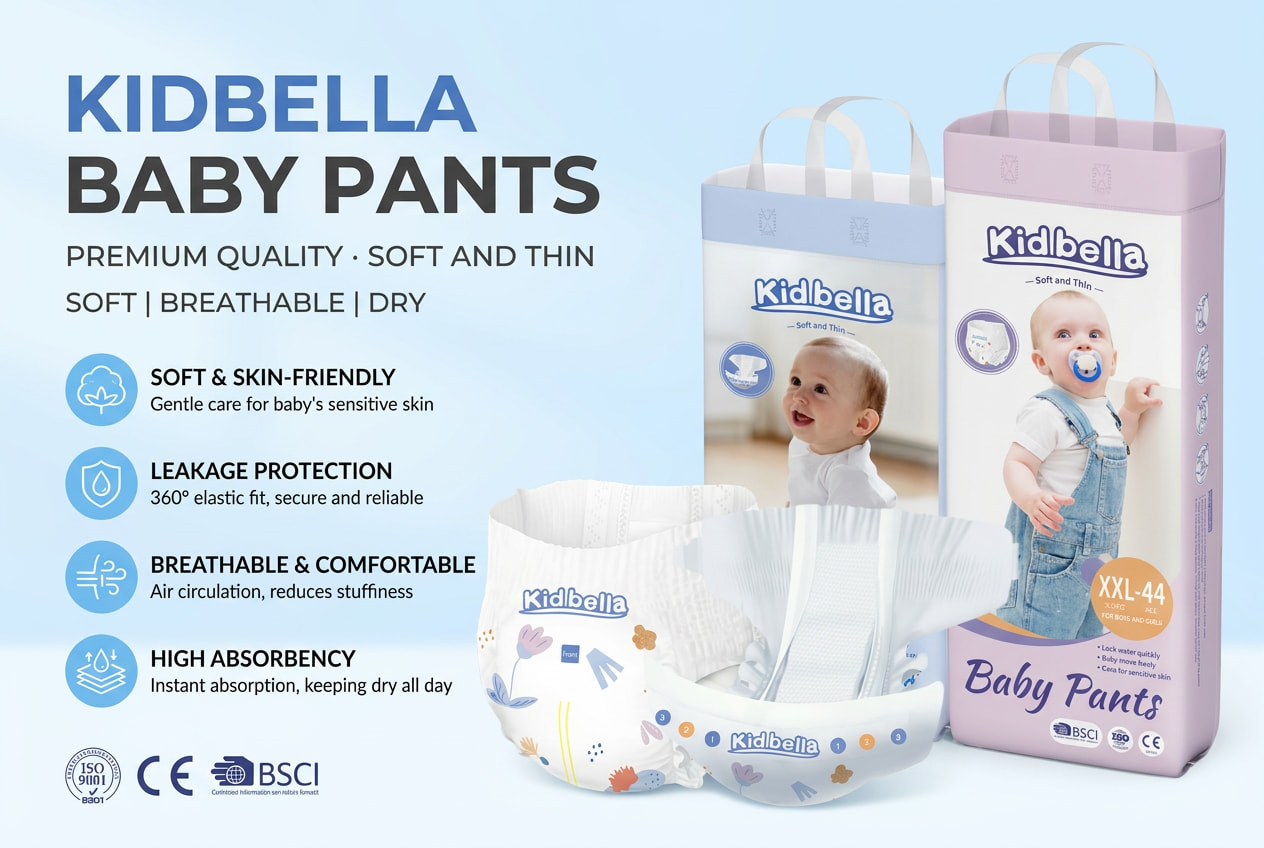
Unlike adult diapers or regular clothing, baby diaper sizing is designed to balance absorbency capacity, body fit, and the baby's developmental stage.
Another crucial point to understand is that baby diaper sizing is not standardized globally. A "Medium" size from one brand may fit differently than a "Medium" from another. When sourcing or buying, you should never rely on size labels alone (such as S, M, L). Instead, pay close attention to weight ranges and actual fit metrics.
Weight
: This is the
primary indicator for baby diaper sizing. Almost all diaper brands list recommended weight ranges (in kilograms or pounds) on their packaging.Developmental Stage & Age
: Newborn stage (NB), crawling/sitting stage (M/L), and walking/toddler stage (L/XL/XXL). As babies become more active, parents and buyers often transition from traditional tape-style diapers (Open Diapers) to baby pants/pull-ups (Pull-up Pants/Training Pants) for easier diaper changes.
Body Shape
: Even if two babies weigh exactly the same, their body shapes can be completely different. Some babies have round, chubby bellies, others have thick thighs (sometimes called "Michelin-man legs"), while some are tall and lean. These body differences affect how a diaper fits around the waist and thighs.
Since weight is the primary factor, monitor and weigh your baby regularly.
Tip
: Step on a digital scale holding the baby and record the total weight, then weigh yourself alone. Subtract your weight from the total to get the baby's precise weight. For accuracy, weigh the baby after a bowel movement or while they are wearing light clothing.
If your baby is chubby or has thick legs, they might need a larger size even if their weight falls within the current size range.
Tool
: Use a
soft, flexible measuring tape
:Do not use rigid metal construction tapes or stiff rulers, as they can scratch the baby and yield inaccurate curves.
Waist
: Wrap the tape flat and even around the baby's natural waistline (usually slightly below the belly button).
Thigh
: Wrap the tape flat around the widest part of the baby's upper thigh (near the groin).
Match your baby's weight and measurements against the specific brand's size chart.
If your baby's weight is right at the boundary or overlapping range of two sizes (for example, a baby weighing 8 kg when S is for 4-8 kg and M is for 6-11 kg):
Rule of Thumb:
Always size up to the larger size (M in this case).
A slightly larger size provides more absorbency, reduces the risk of blowouts, and ensures a comfortable fit around the tummy and legs without pinching.
Below is a standard baby diaper size chart widely used in the international market. While specific brands may vary slightly, this chart serves as a solid baseline for sourcing, purchasing, and OEM manufacturing:
| Diaper Size | Recommended Weight (kg) | Recommended Weight (lbs) | Developmental Stage & Age |
| NB (Newborn) | Up to 5 kg | Up to 11 lbs | 0 - 1 month. Extremely delicate skin; requires frequent changes. |
| S (Small) | 4 ~ 8 kg | 9 ~ 18 lbs | 1 - 3 months. Low activity; baby starts smiling and holding their head. |
| M (Medium) | 6 ~ 11 kg | 13 ~ 24 lbs | 3 - 6 months. Baby starts rolling over and crawling; increased urine volume. |
| L (Large) | 9 ~ 14 kg | 20 ~ 31 lbs | 6 - 12 months. Crawling and sitting; baby starts attempting to stand. |
| XL (Extra Large) | 12 ~ 17 kg | 26 ~ 37 lbs | 12 - 18 months. Walking/toddling; high activity. Pull-ups recommended. |
| XXL (Double XL) | 15 kg+ | 33 lbs+ | 18 months+. Active toddlers; ideal for potty training stages. |
If you notice any of the following signs, it is time to adjust or upgrade your baby's diaper size immediately:
Frequent Leaks and Blowouts
1. : Many parents assume leaks are caused by poor diaper quality, but most leaks happen because
the diaper size is wrong—either it is too big, leaving gaps around the legs, or too small, meaning the core cannot hold the volume of waste.
Red Marks or Chafing
2. : Red marks or deep elastic indentations around the baby's thighs, waist, or hips are clear indicators that the diaper is
too small and too tight. Difficulty Fastening Tabs
3. : If the diaper's fastening tape/tabs can only reach the outermost boundary of the landing zone, or if you have to stretch them aggressively to make them stick, the diaper is too small. Sagging, Slipping, or Gaps
4. : If the diaper sags heavily, shifts out of place when the baby moves, or has visible gaps at the back of the waist, the diaper is
too big.
Low Coverage (Low Rise)
5. : If the waist of the diaper sits too low on the stomach or does not cover the baby's backside properly, the rise is insufficient, meaning the diaper istoo small.
Mistake 1: Sizing by Age Alone
Babies grow at wildly different rates. Two babies of the same age can differ significantly in weight and body proportions.
Always prioritize weight as the primary sizing metric, using age only as a secondary guide.
Mistake 2: Ignoring Thigh Size ("Michelin Babies")
A baby may weigh within the diaper's recommended range, but if they have particularly chubby thighs, the diaper will pinch and leak. Always
size up for babies with chunky thighs.
Mistake 3: Choosing a Tighter Fit to Prevent Leaks
A diaper that is wrapped too tightly is uncomfortable, restricts breathing, and can actually squeeze liquid out of the absorbent core (causing wetness transfer). Always leave a "one-finger" gap at the waist.
Mistake 4: Over-Stocking a Single Size
Babies grow incredibly fast during their first six months, particularly outgrowing NB and S sizes within weeks. Retailers, wholesalers, and parents should manage inventory wisely to avoid dead stock of smaller sizes.
Understanding baby diaper sizing is crucial to ensuring baby comfort, preventing leaks, and reducing product waste. Whether you are buying for your family or sourcing for global distribution, selecting the right size based on weight, body shape, and activity level is key.
If you are looking for high-quality, consistently-sized baby diapers with excellent leakage barriers (including open diapers and baby pants), Quanzhou Tianjiao Lady & Baby's Hygiene Supply Co., Ltd. is a leading global OEM/ODM diaper manufacturer ready to assist you. Contact us today to explore custom product specifications and competitive pricing!
You should always size up. A slightly larger diaper can easily be adjusted for a snug fit using the fastening tapes, and a larger diaper has a bigger absorbent core to handle more urine. Sizing down will lead to skin chafing and frequent leakages.
When your baby begins rolling, crawling, sitting, or standing (usually between 6-9 months, around size M or L), changing a tape diaper can become a battle. Switching to pull-up pants with a 360-degree elastic waistband makes changes as easy as putting on underwear, accommodating active toddlers easily.
No. In fact, most diaper leakages are caused by incorrect sizing or poor fit application (e.g., failing to pull out the leg ruffles/cuffs, uneven fastening, or using a size that is too large). Adjusting the size or the application method usually resolves the issue.
Once fastened, you should be able to slide two fingers flat inside the front waist easily. Also, run your finger around the baby's thigh cuffs to ensure the leg ruffles/guards are flared outward (not tucked inside) and snug without digging into the skin.
Tel: +86 15159593537
Whatsapp: +86 15159593537
Email : runhang@tjdiaper.com.cn
Shuangyang Overseas Chinese Economic-Develop Area,Luojiang,Quanzhou,Fujian,China
 IPv6 network supported
 Scan to wechat: